

Mysterious exploding star and more — January’s best science images
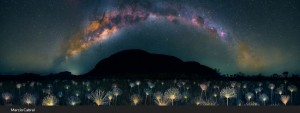
Under the stars. This panoramic photo of Paepalanthus flowers under the Milky Way in Brazil’s Chapada dos Veadeiros national park was a winner of the 2023 Nature Photography Contest. To capture the shot, landscape photographer Marcio Cabral illuminated the flowers with a lamp and used a camera specialized for astrophotography.
Ready for the close-up. Capturing this microscopic cross section of marram grass (Ammophila arenaria) stems was a challenge for photographer Gerhard Vlcek, who won the Micro category of the Close-up Photographer of the Year contest with this colourful shot (see below for a selection of other winning entries). “Staining and preparing the sample was very tricky,” Vlcek writes in his competition entry. “I had to use the tiniest brush to manipulate the less-than-1mm parts in different staining and chemical solutions before positioning the stems on the slide. After that, taking the photograph was the easy part!”

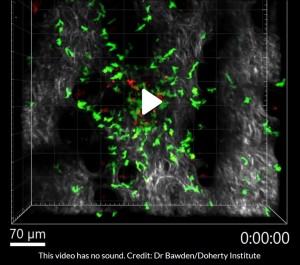
Melanoma fighters. This video shows immune cells called CD4+ T cells (green) attacking cancer cells (red) in skin. CD4+ T cells are often called helper T cells, because they are known to play a part in activating and regulating other immune cells. But a detailed analysis that shows how effective CD4+ T cells are at controlling melanoma challenges a conventional understanding of their role. “Harnessing their potential therapeutically holds great promise for the development and improvement of current cancer immunotherapies,” Thomas Gebhardt, an immunologist at the University of Melbourne, Australia, said in a statement.
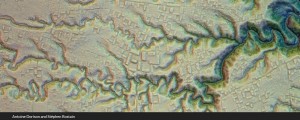
Lost cities. Scientists have revealed the extent of a sprawling ancient settlement hidden beneath dense vegetation in the Amazon rainforest using LIDAR imaging combined with ground excavations. The 2,500-year-old remains include a series of interconnected cities — including houses, plazas, roads and canals — in eastern Ecuador that are comparable in size to those of Mayan cities in Mexico and Central America. Archaeologists think that the cities could have been home to tens or even hundreds of thousands of people for up to 1,000 years, but little is known about what their society was like.
Lost cities. Scientists have revealed the extent of a sprawling ancient settlement hidden beneath dense vegetation in the Amazon rainforest using LIDAR imaging combined with ground excavations. The 2,500-year-old remains include a series of interconnected cities — including houses, plazas, roads and canals — in eastern Ecuador that are comparable in size to those of Mayan cities in Mexico and Central America. Archaeologists think that the cities could have been home to tens or even hundreds of thousands of people for up to 1,000 years, but little is known about what their society was like.
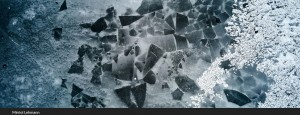 Frozen lake. A few snow-free days offered a rare opportunity for photographer Mériol Lehmann to photograph the unusual patterns of ice on the surface of this frozen lake in the Lac-Saint-Jean region of Quebec, Canada. “Usually, at this time, there is abundant snow … the icy surface of the lake is thus always invisible,” says Lehmann. “My family has had a farm there for 40 years, and this is the first time I have witnessed such a spectacle.” The photo was taken using a drone.
Source: Nature


 Власник сајта: HR2RENT - део слагалице који Вам недостаје