

Farming bill threatens Spain’s most important wetland, scientists say
Plan to expand irrigation draws fierce criticism
A plan to expand irrigated farming around one of Europe’s most important wetlands has alarmed conservation scientists and European officials. They fear the proposal, advanced earlier this month by conservative legislators in Spain’s autonomous region of Andalusia, will undermine efforts to preserve species-rich marshes in Doñana National Park that are already threatened by drought and extensive water withdrawals.
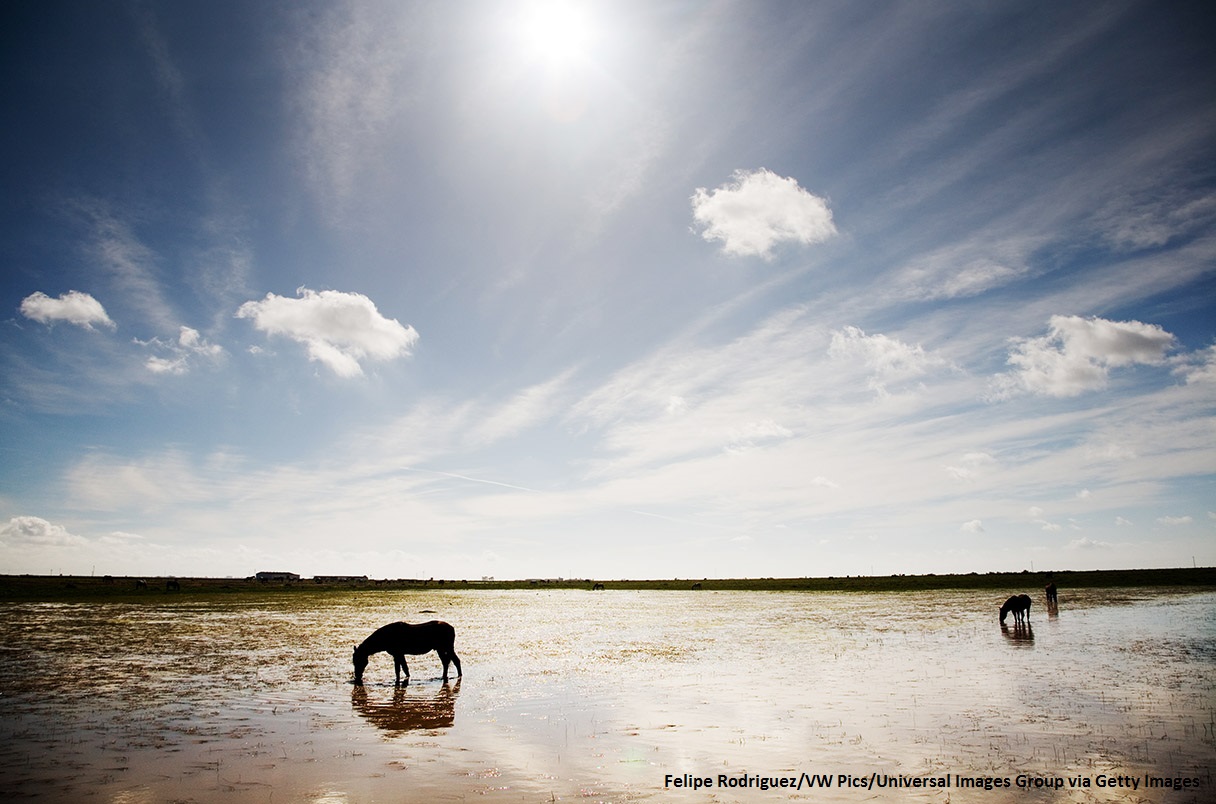
“This decision goes exactly in the opposite direction to what is needed,” says biologist Eloy Revilla, director of the Doñana Biological Station, a research institution. Water use in the region is already “unsustainable,” some 1000 scientists and 25 scientific organizations warned in a public declaration issued last year. Spain could face financial penalties if Andalusia finalizes the move, European Union officials said this week.
Featuring a unique combination of sand dunes, forests, and marshes, the 54,000-hectare Doñana park in southern Spain is a hot spot for a half-million migratory birds and a haven for endangered species, including the Iberian lynx and the Spanish imperial eagle. It is a United Nations World Heritage Site and is on the Ramsar list of the world’s most important wetlands.
Researchers fear the new Andalusian proposal, which won preliminary approval on 12 April, will make things worse. Backed by the conservative Partido Popular party with support from the far-right Vox party, it calls for partially reversing a 2014 management plan that barred irrigation on some 1600 hectares of fields. Now, farmers would be allowed to irrigate about half of that land, although the exact area is not yet final. Backers say the plan will help support some 600 farm families and won’t harm the park, in part because farmers will be allowed to use only surface water.
Scientists and others are skeptical of that claim. One major concern, they say, is that the law will essentially provide an amnesty to farmers who have drilled numerous illegal wells in recent years to feed the lucrative and booming berry trade.
Local political considerations seem to have prevailed, however. In May, Spain will hold municipal elections, and many observers see the proposal as a bid by Andalusia’s government to win support from farmers. “It’s a populist idea,” says Fernando Valladares, an ecologist at Spain’s National Museum of Natural Sciences.
Andalusian lawmakers are moving quickly to finalize the new law. But both European and Spanish leaders are warning there will be consequences if they move ahead.
On 20 April, EU Commissioner for the Environment Virginijus Sinkevičius said it would use “all means available” to ensure that Spain abides by the 2021 European court ruling. The European Union could impose fines or even withdraw promised economic aid. Meanwhile, Spain’s center-left prime minister, Pedro Sánchez, has urged Andalusia to “get back on track with European law” and “stop this outrage.”
Even if the bill is finalized later this year, Valladares predicts it will do little for farmers. “There’s no water available,” he says. “It goes against all evidence.”
Source: Science


 Власник сајта: HR2RENT - део слагалице који Вам недостаје